
Where we are with FORSYTE
A founder update - why I started building FORSYTE, how far the app has come, and where I think this kind of capability is heading.
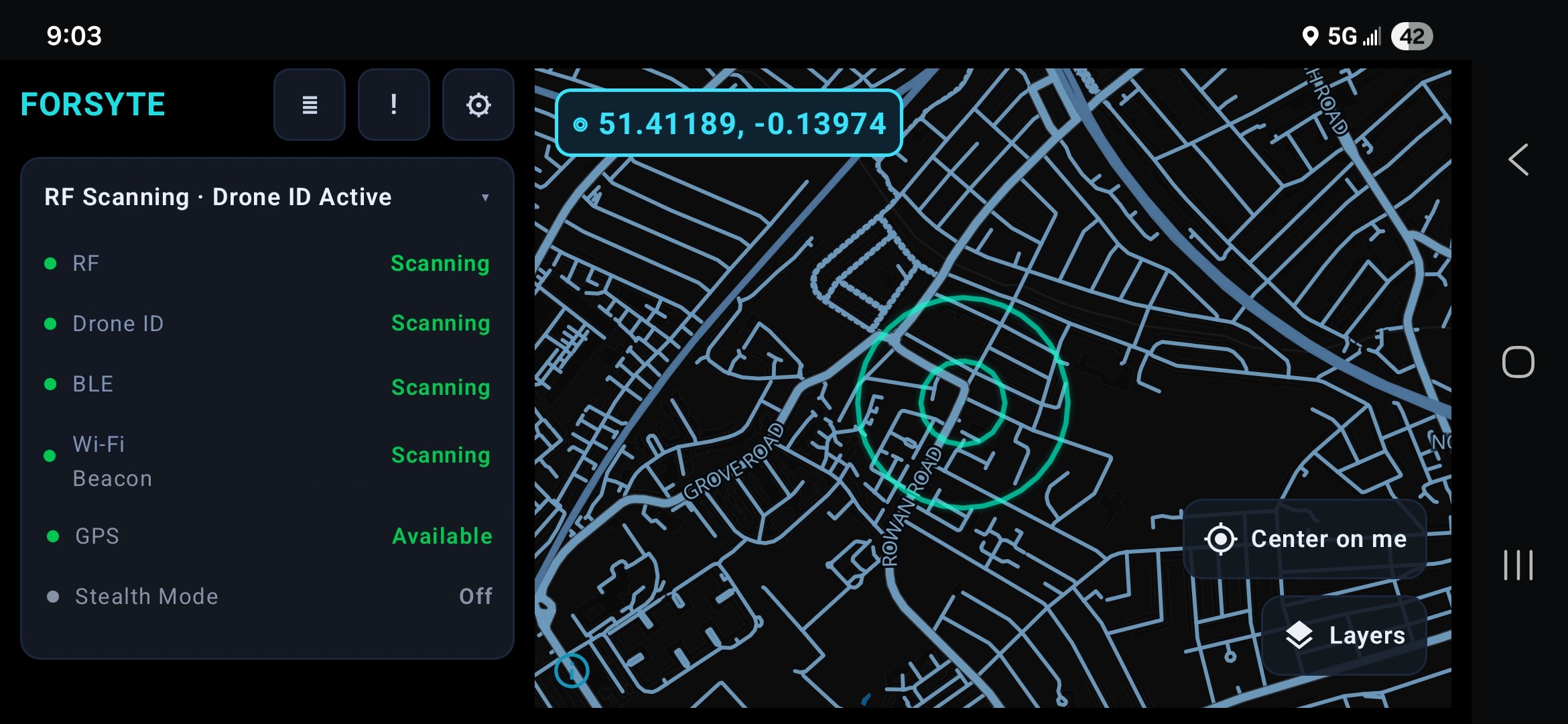
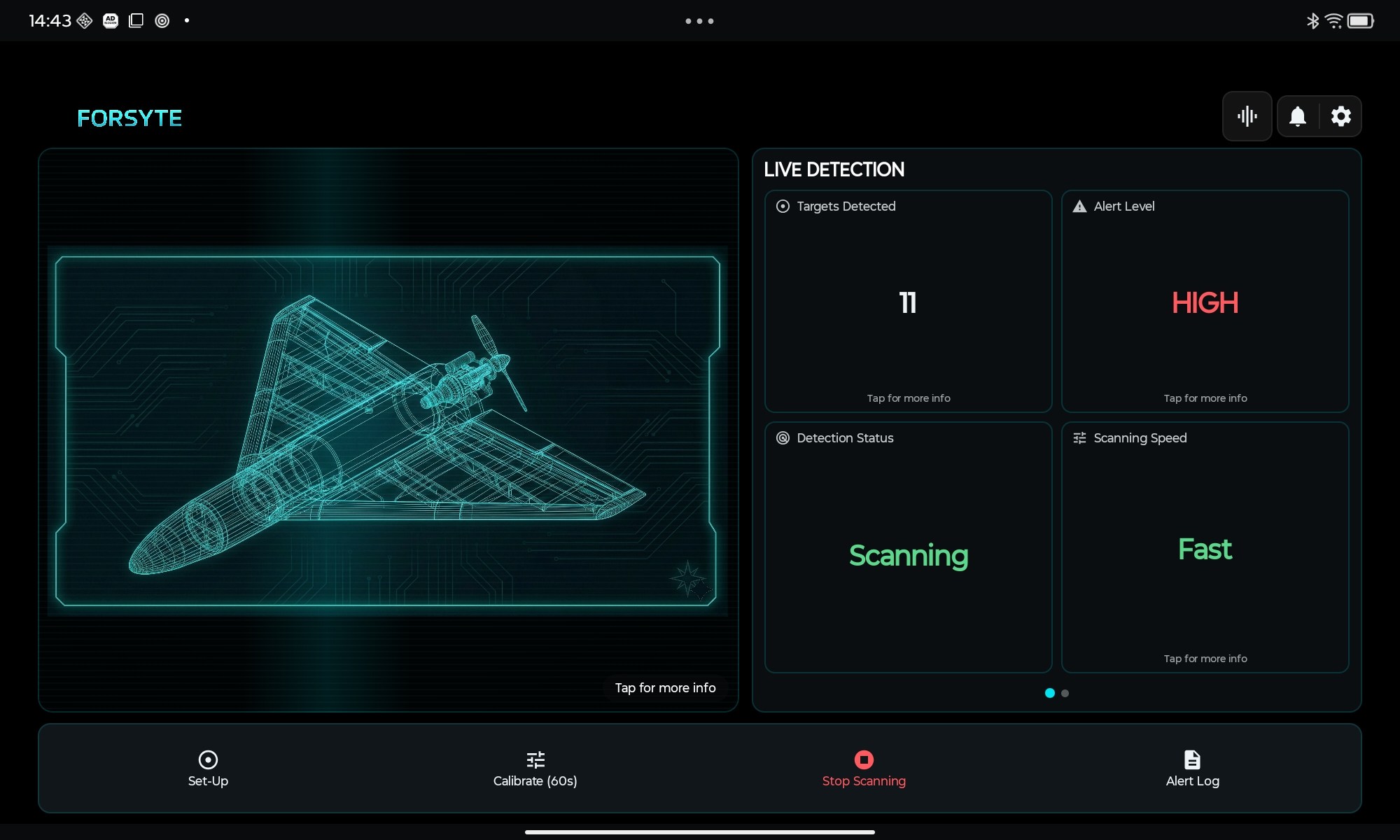
Just a quick update on where we are with FORSYTE.
A lot has changed since I last properly spoke about it. To be honest, I've been so deep in development that I've probably neglected the marketing side, the updates, and just keeping people informed on what I'm actually building.
But we're now at a point where the website is built, the app is built, FORSYTE is available, and I feel like I've built enough that I'm genuinely proud of it.
The starting point for this goes back to my Army days.
I remember looking at some of the kit we were using and thinking the cost was ridiculous. Not because the kit wasn't useful, but because I couldn't understand how it could cost that much.
When I left, and especially after watching how quickly things were changing in Ukraine with drones, jammers, and cheap technology being used everywhere, it became obvious to me that this problem wasn't going away.
I wanted to build my own detection system because I couldn't afford the systems that cost hundreds of thousands of pounds.
Then I realised a lot of other people probably had the same problem.
The other issue was usability.
A lot of this equipment is difficult to use unless you've had proper training. In my case, I had around a year of training in the British Army before I was even put in a unit to start using specialist equipment properly. Even after that, there were still more courses for specific pieces of kit.
That is not realistic for everyone.
So from the beginning, I wanted FORSYTE to be something you could hand to someone and they could actually use. Not something that only makes sense if you are an RF guy.
The early version of the app was very basic.
It worked, but it was technical. You were looking at frequencies, numbers, RSSI values, and things that most people don't care about and shouldn't need to understand.
Most people don't want to look at a screen full of numbers and try to work out what it means. They just want to know if there is something odd going on nearby.
Is there a drone nearby?
Is something interfering with Wi-Fi?
Is something jamming GPS?
Is something happening that I should probably pay attention to?
That is what I've tried to make FORSYTE do.
Now it is in a completely different place.
The app looks better, it is much easier to use, and you can get up and running quickly. You can run scans, see detections, use affordable SDR receivers, and get a much clearer idea of what is happening around you without needing to be a specialist.
One of the tests I care about most is what I call the 10-year-old test.
I handed FORSYTE to my nephew, gave him a short walkthrough, and asked him to run a scan for drones. He was able to do it.
That matters to me, because if a system only works when a specialist is standing next to you explaining every button, it is not practical enough.
Where I think FORSYTE is going is simple.
I think this kind of capability is going to become normal.
As drones become more common, as jammers become more common, and as criminals and people with bad intentions make more use of cheap electronic tools, people are going to want to know what is happening around them.
Security teams will need it. Police may need it. Airports, events, infrastructure sites, and smaller organisations may need it. But I also think regular people will start caring about this too.
A few weeks ago, some people pulled up near where I live and used a Wi-Fi jammer to knock out Ring doorbells and cameras in the area.
The aim was to interfere with the security systems, use equipment to capture or replay a car key signal, and steal the car.
A neighbour intervened before they got that far, but that kind of thing is becoming more common.
That is why this matters.
FORSYTE is not just about drones.
It is about making the things you normally cannot see easier to understand. Drones, jammers, interference, strange signals, things happening in the background that could actually affect you.
The aim is simple.
This sort of capability should not cost hundreds of thousands of pounds, and it should not need a year of training before someone can use it.
The way I look at it is, this could become something like the next walkie-talkie.
Not because it does the same thing, but because it gives teams a simple tool they can actually carry, actually afford, and actually understand.
We are now at the stage where FORSYTE is ready for people to try.
The app is free to start with, so people can download it, test it, and see what they think.
I'd really like feedback from people who are interested in this space, whether that's security, defence, policing, infrastructure, drones, radio, or just people who understand that this problem is only going to grow.
This has taken a lot of work to get to this point, and there is still a lot more to build.
But it is real now.
Get Field Notes by email
Occasional updates on what we’re building, testing, and learning. No spam, and you can unsubscribe at any time.
Get started with FORSYTE
FORSYTE is an Android app that works with SDR hardware to help you observe nearby radio activity. Download it, see who it is built for, or start with the basics.